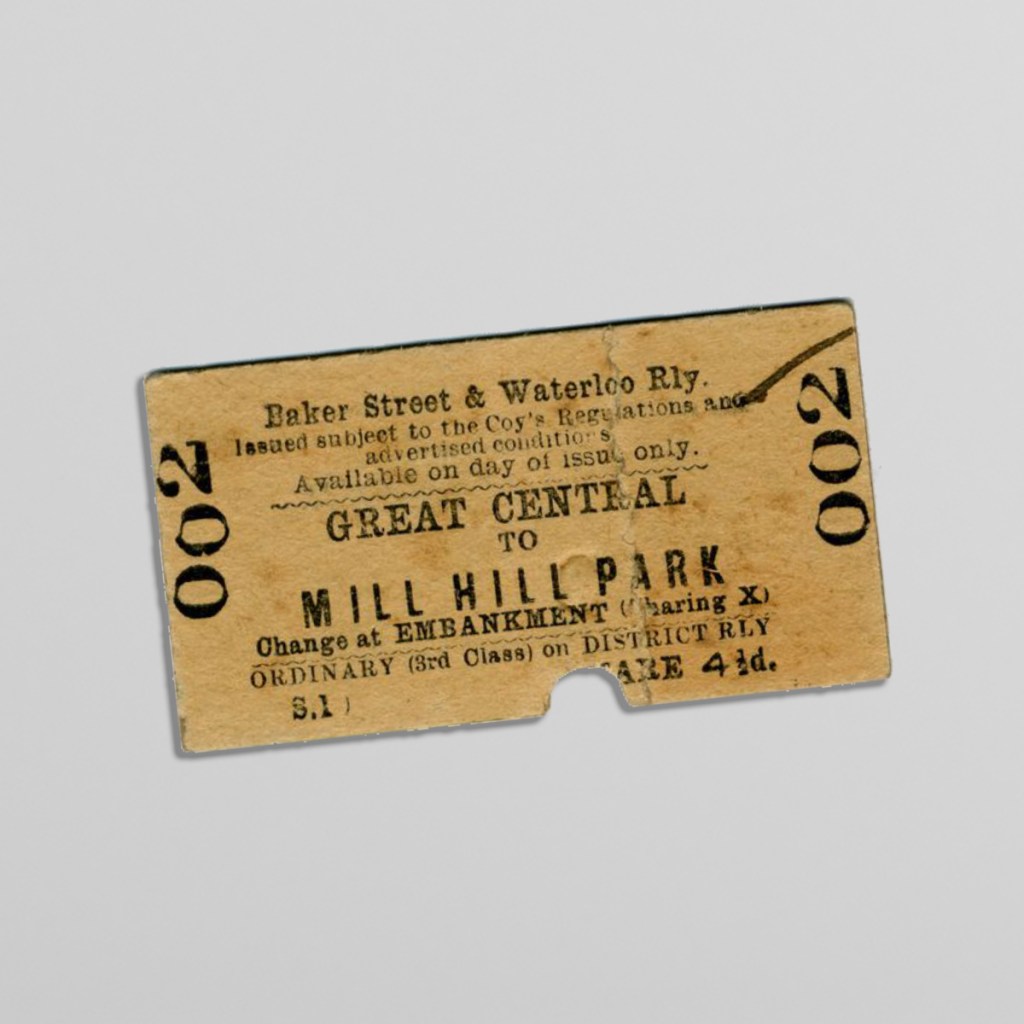

In 1938, stepping aboard the Flying Scotsman felt like entering a gentleman’s club that travelled at 100mph. Mahogany panelling gleamed under brass fittings. White-jacketed stewards served proper meals on bone china while the countryside rolled past like a moving painting.
The journey wasn’t just transportation—an event worth anticipating, experiencing, remembering.
Today’s trains are marvels of efficiency—lighter materials, optimised seating arrangements, streamlined operations that move millions of passengers with clockwork precision.
Everything has been refined, measured, and improved.
Yet somehow, in becoming perfectly efficient, they lost something unmeasurable: the magic that made people want to take trains in the first place.
Has the same disease infected marketing?
We’ve become obsessed with optimisation—cost per lead, acquisition costs, conversion rates measured to three decimal places. Like railway engineers replacing mahogany with plastic, we’ve systematically stripped away everything that can’t be easily quantified.
(And most of what makes people want to buy things.)
I watched this play out spectacularly at a previous company. The marketing team had achieved remarkable efficiency: £25 per lead, like caffeinated squirrels operating a particularly well-oiled funnel machine.
Beautiful spreadsheets. Immaculate conversion paths. Executives nodding approvingly at quarterly reviews while the actual humans they were targeting remained mysteriously unimpressed.
Then someone did the uncomfortable maths. The lifetime value was staggering when we traced one of those £25 leads to actual revenue. If that single lead had cost us £10,000 to acquire, it would still have been profitable.
Wildly, embarrassingly profitable.
(The kind that makes you wonder if you’ve accidentally discovered the economic equivalent of perpetual motion.)
But there we were, optimising for efficiency instead of effectiveness. Polishing the brass fittings while the train went nowhere.
Lead nurturing?
Most marketing automation operates on the same flawed premise. We build elaborate sequences designed to deliver “the right message at the right time to the right person”—like a Swiss timepiece of customer psychology.
Except psychology isn’t Swiss. It’s more like a cat: occasionally predictable, mostly not, and unimpressed by your carefully calibrated approach.
(Especially at 3 am when it decides your pillow is its pillow and your opinion on this matter is irrelevant.)
The truth about lead nurturing? It mostly works by reminding people you exist more often—not through sophisticated behavioural triggers or carefully crafted journey mapping, but through the simple, inelegant act of repeatedly showing up until someone needs what you’re selling.
This is about as romantic as discovering that great cooking is mostly salt and fat and paying attention—but it is considerably more effective than pretending it’s alchemy.
Value hides in the waste.
The uncomfortable truth makes CFOs develop nervous twitches: much of marketing’s value lives in what looks like waste. The excess reach that hits people who aren’t quite ready yet.
The creative flourishes that cost more but stick in memory like particularly stubborn chewing gum on a shoe. The brand campaigns that can’t be traced to immediate sales but somehow make everything else work better.
(Much like how having decent coffee in the office doesn’t directly increase productivity, but try removing it and watch the revolution!)
At RevLifter, we see this daily. Retailers have three ways to grow: sell more to more people often, sell more to more people, and sell more. That’s it.
There is no secret fourth lever hidden behind a paywall or buried in the mystical depths of a marketing automation platform that costs more than a small country’s GDP.
Yet clients arrive wanting to optimise the wrong metrics—usually the ones that make their spreadsheets look tidy rather than grow their businesses. They want to reduce the cost per offer shown when they should be asking whether showing more offers (even “inefficiently”) drives more total revenue.
It’s the train problem again: optimising for cost per mile travelled while ignoring whether anyone wants to take the journey.
(Or whether they’d rather walk backwards through broken glass than endure another replacement bus service.)
The audit that matters
If you’re running marketing and suspect you’re optimising for the wrong things, here’s the simplest diagnostic:
Find what’s working
Working—not what looks good in reports, but what’s driving business results.
Then ask the crucial question: are you trying to make it cheaper, or are you trying to make it bigger?
Most organisations default to cheaper. They find a successful campaign and immediately start trimming—reducing spend, targeting more narrowly, and automating the creative process.
For example, railway companies replace mahogany with plastic and wonder why passenger satisfaction drops.
The alternative approach is to double down. Spend more to reach more people. Improve the creativity. Increase frequency. Make it work better, not cheaper.
This may seem wasteful to spreadsheet-trained minds, but it’s often the only way to discover what actually scales,
(And the only way to avoid the corporate equivalent of death by a thousand cost-cuts.)
A deliberate choice to be messy
Sometimes the most effective marketing strategy is deliberately inefficient. Brand awareness campaigns that can’t be traced to immediate conversions. Creative approaches that cost more but create memorable experiences. Reaching people who aren’t ready to buy yet but might be in six months.
(When they’ve finally admitted that their current solution works about as well as a chocolate teapot.)
Airlines learned this lesson the hard way. In optimising for efficiency, they’ve created a uniformly miserable experience that people actively avoid flying unless absolutely necessary
What seemed like smart cost management became a slow-motion brand suicide, complete with the kind of customer satisfaction scores typically reserved for tax investigations and root canal procedures.
Marketing faces the same choice. We can continue optimising everything down to plastic efficiency, measuring every touchpoint and eliminating every unmeasurable element.
Or we can remember that people don’t fall in love with conversion rates. They fall in love with experiences, stories, moments that feel special enough to remember and share.
When someone asks you to optimise a successful campaign for efficiency, the question that matters is this: are we trying to build a better train, or just a cheaper one?
The answer will tell you everything you need to know about whether you’re solving the right problem—or just polishing the brass fittings while the passengers find other ways to travel.
The mahogany costs more. But it’s also why people chose your train in the first place.
This article was written with the assistance of AI.