Georges Claude was trying to solve a lighting problem in 1910, not invent the aesthetic foundation of every trendy 21st century coffee shop. But there he stood in his Parisian laboratory, watching electricity dance through tubes of rarefied gas, creating an otherworldly glow.
The French engineer had stumbled onto something. Unlike Edison’s harsh incandescent bulbs, Claude’s tubes produced light that seemed alive—pulsing, coloured, almost organic. He called it “neon” after the Greek word for “new.”
He had no idea he’d just created a marketing weapon.
Two years later, a Parisian hairdresser saw Claude demonstrate his glowing tubes at the Paris Motor Show. He didn’t see scientific innovation. He saw customer magnetism.
In 1912, he commissioned the first commercial neon sign: ‘Palais Coiffeur’ blazed in orange letters above his salon on Boulevard Montmartre.
The effect was electric—literally and figuratively. Parisians stopped mid-stride. They stared. They pointed. They remembered. Frisquet had accidentally discovered something profound: light itself could become a brand.
Within months, every ambitious merchant in Paris wanted neon. Bakeries, pharmacies, restaurants—all clamouring for that impossible glow.
By 1915, the Cinzano vermouth sign stretched across the Champs-Élysées, visible for miles. Claude’s lighting company couldn’t keep up with demand.
Neon across the Atlantic
American car dealers were the early adopters. Earl C. Anthony, a Los Angeles Packard dealer, saw neon at the Paris Auto Show in 1923 and immediately bought two signs reading ‘Packard’ for $24,000—roughly $350,000 in today’s money.
When those signs arrived in California, they stopped traffic. Literally. Police had to manage the crowds gathering to stare at the glowing letters.
But it was Las Vegas that understood neon’s true potential. The desert town needed to announce itself against an infinite backdrop of nothing. Neon became Vegas’s voice—bigger, brighter, more audacious with each passing year. The Golden Nugget. The Flamingo. Caesar’s Palace.
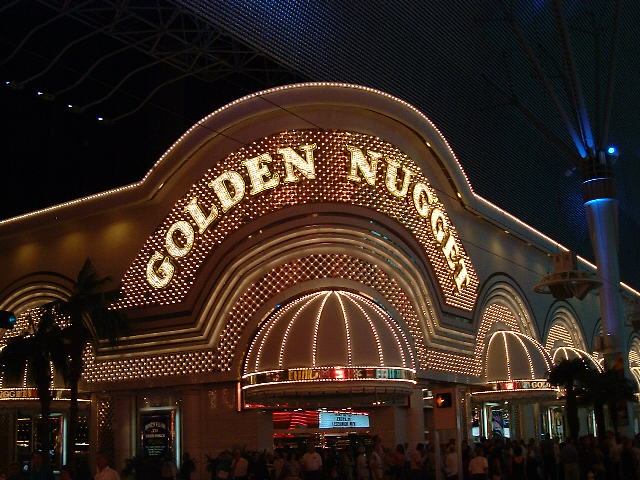
Each sign was pure marketing theatre rendered in flickering glass and noble gases.
The 1950s represented neon’s imperial phase. Drive down any American main street and you’d see a symphony of glowing promises: motels promising comfort, diners promising home cooking, bars promising good times.
Neon had become the visual language of American optimism—bold, colourful, impossible to ignore.
The downside
Lead poisoning concerns emerged in the 1960s. Energy costs soared. Cheaper alternatives appeared. The environmental movement questioned everything industrial. Cities passed ordinances restricting neon signs as visual pollution. The magic dimmed.
By the 1980s, most of those iconic Vegas signs were relegated to the Neon Museum—a graveyard of broken promises and faded dreams. Claude’s creation seemed destined for history books.
But marketing tools never truly die—they hibernate until nostalgia makes them relevant again.
The resurrection
Small businesses—the kind corporate marketing forgot—rediscovered neon’s power. Not as advertising, but as atmosphere. Independent bookshops installed subtle neon poetry. Craft breweries embraced neon’s anti-corporate aesthetic. Vintage neon became authenticity shorthand.
Then Instagram arrived, and everything clicked into focus.
Today’s “neon” signs are mostly LED imposters, but they’re everywhere. Walk through any city’s creative quarter and count them: “Good Vibes Only” glowing in millennial pink. “But First, Coffee” scripted in warm white. “Create Daily” humming in electric blue.
Modern neon doesn’t sell products—it sells feelings.
We’ve sanitised the chemistry but amplified the magic. Contemporary neon creates atmosphere rather than advertising. It signals that a space understands vibe over volume, authenticity over efficiency.
Claude’s accidental discovery evolved from scientific novelty to marketing ubiquity to cultural shorthand for the anti-corporate.
The cycle reveals something profound about marketing innovation. Revolutionary tools follow a predictable pattern: they emerge from unrelated fields, get adopted by early risk-takers, experience explosive mainstream growth, face inevitable backlash, then resurface as markers of authenticity.
Consider three distinct eras of neon adoption:
- Historical: Frisquet’s Parisian salon used neon for pure attention—revolutionary technology deployed for traditional marketing goals. The medium was the message because nothing else looked like it.
- Contemporary: Las Vegas perfected neon as spectacle—bigger, bolder, more theatrical. Neon became an arms race where visibility meant survival. The medium became amplification.
- Unexpected: Today’s coffee shops use faux-neon for Instagram-ability. The technology is obsolete, but the aesthetic signals rebellion against corporate sterility. The medium became metaphor.
Each era thought it understood neon completely. Each era was partially right.
This pattern repeats across marketing history. Radio advertising began as novelty, dominated mid-century marketing, then became background noise before finding new life as podcast intimacy. Television commercials followed the same arc: innovation to ubiquity to irrelevance to authenticity signals.
The lesson isn’t about neon—it’s about recognising when familiar tools are ready for reinvention.
Smart marketers watch for the signals. When established channels become saturated, when audiences develop immunity, when something feels tired—that’s when yesterday’s innovation becomes tomorrow’s authenticity play.
The neon principle applies beyond advertising mediums. Consider handwritten notes in an email age. Physical business cards in a digital world. Human customer service when everything’s automated. Old methods don’t disappear—they become differentiation tools.
What this means for marketing
Track the cycle
Every communication method follows the neon pattern: emergence, adoption, saturation, rejection, resurrection. Map where your current channels sit in this cycle.
Embrace the unfashionable
Direct mail feels outdated until it becomes the only physical item in someone’s inbox. Print advertising seems expensive until it’s the only non-digital touchpoint in your category.
Understand authenticity signals
Today’s audiences crave anti-corporate aesthetics. Yesterday’s mainstream tools often become tomorrow’s authenticity markers. The key is deploying them intentionally, not accidentally.
Remember the emotional function
Modern neon doesn’t illuminate—it atmospherises. Ask what emotional job your marketing tools actually perform, beyond their stated function.
Georges Claude died in 1960, two years before the Vegas neon boom peaked. He missed both neon’s glory days and its resurrection. But his accidental discovery proved something marketers forget: the most powerful tools emerge from solving completely different problems.
Sometimes the best marketing innovations aren’t trying to be marketing innovations at all.
Not bad for a French engineer who just wanted to make gas glow in the dark.
This article was written with the assistance of AI.