

The Tricorn Centre in Portsmouth stood like a concrete manifesto in the heart of the shopping district—bold, uncompromising, and utterly divisive. This brutalist landmark dominated the skyline for three decades, generating passionate reactions from everyone who encountered it.
Most people despised it with genuine intensity. A smaller group found it fascinating. Almost no one felt indifferent.
This binary response wasn’t a design flaw. It was the entire point.
During my university years in Portsmouth, the Tricorn became part of my daily landscape. I watched people navigate around it, react to it, and argue about it. What struck me wasn’t whether people liked or disliked the building—this massive concrete structure commanded attention in ways that prettier, more conventional buildings never could.
(Despite my continued requests, I have failed to convince anyone to move into a bold, concrete edifice with me.)
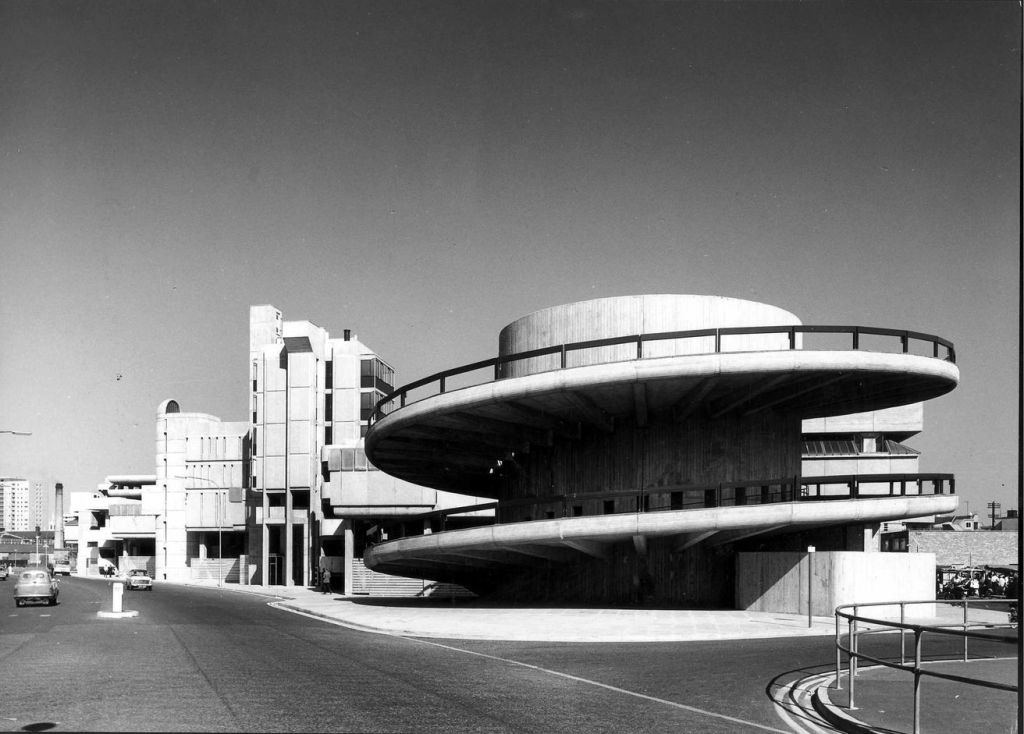
The honest materials movement
Brutalist architecture emerged from a deceptively simple principle: buildings should be honest about what they’re made of. The term derives from “béton brut”—raw concrete in French—rather than any intention to be harsh or imposing. Post-war architects believed that revealing materials in their natural state, without decorative facades or apologetic coverings, could create more authentic spaces.
This philosophy extended beyond aesthetics into function. These buildings were designed as machines for living, working, and gathering—spaces prioritising utility and social purpose over conventional beauty. The massive concrete forms didn’t hide their structural elements but celebrated them.
Consider Preston Bus Station (I’m afraid I must insist), widely regarded as a masterpiece of the movement. Its sweeping concrete curves don’t pretend to be anything other than a sophisticated transportation hub. Yet these functional elements are executed with confidence and clarity, and the building achieves an undeniable sculptural quality (for good and bad).
The attention economy of space
Their shared understanding of attention as a scarce resource connects brutalist architecture to effective marketing strategy. Both disciplines recognise that being memorable often matters more than being universally liked in environments saturated with visual noise.
The best brutalist buildings, like the best marketing campaigns, make deliberate choices about their visual language. They understand that clarity of purpose, expressed boldly, creates stronger connections than tentative attempts to please everyone. Apple’s early advertising campaigns shared this philosophy—uncompromising vision executed confidently, accepting that some audiences would respond negatively.
This approach requires courage. Soviet-era monuments used brutalist language to communicate collective identity and ambition with zero subtlety (and intentionally creating a forboding atmosphere).
Whether you agreed with the politics or not, these structures succeeded in their primary goal: creating significant spaces that demanded acknowledgement.
The problem with pleasing
The most common criticism of brutalist architecture—”it’s just ugly concrete”—reveals a fundamental misunderstanding. These buildings were never designed to be pretty in conventional terms. They were designed to be functionally excellent while communicating possibilities and purpose.
This distinction matters enormously for anyone creating something meant to be noticed. The middle ground between love and hate is often indifference, and indifference is the most dangerous place for any communication to land. A building, advertisement, or brand that generates no strong reaction has already lost attention.
The Tricorn Centre was demolished in 2004 amid widespread celebration. Local newspapers treated its destruction like liberation from architectural oppression. But something was lost when that uncompromising concrete landmark disappeared—not beauty in any traditional sense, but the presence of something that forced people to form an opinion.
Strategic implications for modern communication
Brutalist architecture offers three key lessons for anyone trying to cut through contemporary noise:
First, honest materials create authentic connections.
Just as brutalist buildings revealed their concrete rather than disguising it, effective communication works best when it clearly shows what it’s made of. Authentic messaging that acknowledges limitations alongside strengths builds more trust than perfectly polished presentations that feel hollow.
Second, clarity of purpose enables bold choices.
The best brutalist buildings succeeded because they knew exactly what they were trying to achieve and designed every element to serve that purpose. Marketing strategies that begin with clear objectives can make bolder creative choices because every decision can be evaluated against defined goals.
Third, memorable beats are universally liked.
The Tricorn Centre generated strong reactions for thirty years, while more conventionally attractive buildings from the same era have been forgotten entirely. In markets where attention is the primary currency, being noticed by the right audience matters more than being approved by everyone.
The contemporary application
What connects brutalism to my other design obsessions—Googie architecture, modernist graphics, those communist public information posters that treat propaganda like graphic design, having a fever dream—is the refusal to whisper when you could shout through a megaphone while riding a motorcycle.
Modern architects still employ massive, undecorated forms to create impact, though they might avoid the brutalist label for commercial reasons. When executed thoughtfully, these spaces achieve something remarkable: they feel both monumental and human-scaled, bold enough to register in our oversaturated visual environment while remaining functional for daily use.
The Brunswick Centre in London effectively demonstrates this balance. Its residential and commercial spaces use brutalist principles—raw concrete, bold geometric forms, uncompromising structural honesty—while creating an environment that people actually enjoy inhabiting.
This suggests the possibility of learning from brutalism’s successes while avoiding failures. The movement’s commitment to honesty and purpose remains valuable. Its occasional indifference to human comfort provides lessons about where bold vision needs to be tempered with practical consideration.
Building for notice
That massive concrete presence in Portsmouth taught me something fundamental about communication: sometimes the most important thing you can do is create something that forces people to stop and form an opinion. Whether they love or hate it matters less than whether they notice it exists.
This principle becomes even more relevant in our current environment, where countless messages compete for limited attention. The safe middle ground that offends no one often accomplishes nothing. The bold choice that generates strong positive and negative reactions at least creates the possibility of connection with those who resonate with your vision.
The Tricorn Centre was many things: functional, divisive, uncompromising, and controversial.
But it was never ignored. Sometimes that’s the most valuable quality a piece of communication can possess.
This article was written with the assistance of AI.