The woman at the National Trust café looked genuinely offended. Not the polite, British sort of offended where you tut quietly and write a strongly worded letter to someone called Derek at customer services.
Actually offended. Like I’d just suggested we relocate Stonehenge to a car park in Slough (which, honestly, might improve both places).
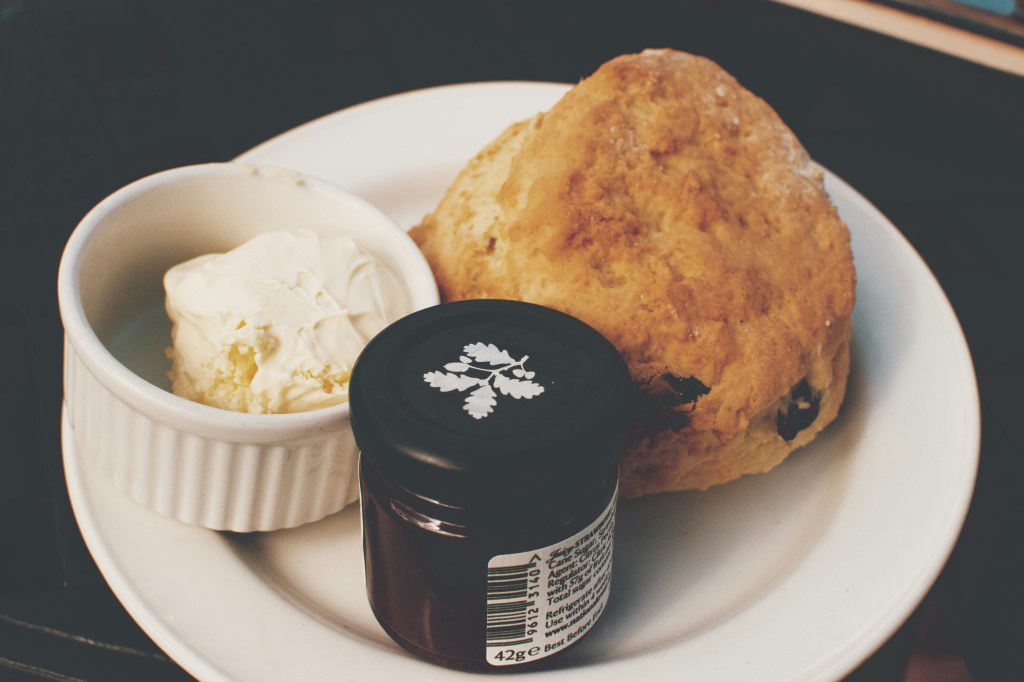
I’d ordered a cream tea and committed what she clearly considered a geographical hate crime: I’d asked for the jam to go on second.
“You’re not from round here,” she said, wielding a scone like evidence in a court case.
(The scone, incidentally, looked perfectly innocent in all this drama—just sitting there being crumbly and wondering why humans are so complicated.)
She was right, of course. I’m from Devon. And in Devon, we do things properly.
The great cream tea schism
Right. So here we are, diving into what might be Britain’s most deliciously ridiculous conflict—and trust me, that’s saying something in a country where we once had a genuine political crisis about whether a pasty should have vegetables in it.
For the uninitiated (bless your innocent hearts), Britain’s cream tea wars make the Hatfields and McCoys about hedge trimming. The battle lines are drawn at the River Tamar—that modest waterway separating Devon from Cornwall that’s basically the Berlin Wall of baked goods.
On one side: civilised people who put clotted cream on their scone first, then jam. On the other: Cornish folk who inexplicably reverse this order and occasionally mutter about independence (from England, not from logical scone construction—though frankly, both would be equally misguided).
Let me tell you about the Devon method… It makes perfect sense, like putting your shoes on before your socks or checking your bank balance before buying that third coffee subscription. Butter acts as a foundation, a structural base upon which great things can be built. Cream is the scafolding, jam goes on top, like any sensible condiment with proper manners and basic understanding of gravity.
The Cornish method, meanwhile, defies both logic and the fundamental laws of physics that govern the behaviour of dairy products in a controlled afternoon tea environment. Jam first creates an unstable base—imagine trying to build a house on jelly (which, now that I think about it, might explain some of Cornwall’s more creative architectural choices).
The cream slides off. Chaos ensues.
But here’s where it gets interesting for those of us who spend our days thinking about human behaviour and decision-making (and also for those of us who just really care about proper scone etiquette).
The marketing lesson hidden in afternoon tea
Here’s the thing—every time I explain the cream-first philosophy to someone, I’m essentially doing what we do in marketing every day: trying to convince people that their deeply held preferences might be fundamentally, catastrophically wrong.
(Though with more jam involved and significantly less PowerPoint.)
Consider the parallels, if you will (and honestly, you should, because this is where it gets properly interesting).
Both Devon and Cornwall have:
- Passionate advocates who’ve never questioned their approach (the sort of people who’d defend their method with the intensity of someone explaining why their favourite Doctor Who is objectively superior)
- Historical justifications for their methodology (“We’ve always done it this way” being the rallying cry of people everywhere who’ve stopped questioning why they do literally anything)
- Complete conviction that the other side has lost their collective minds
- Zero interest in switching teams, ever, not even if you offered them a lifetime supply of clotted cream (which, let’s be honest, would be quite the incentive)
Sound familiar?
It’s every brand positioning battle ever fought, from the dawn of commerce to whatever heated debate is currently raging on LinkedIn about the correct way to measure customer lifetime value.
iOS versus Android.
Coke versus Pepsi.
Email marketing versus whatever the latest channel du jour happens to be (probably something involving artificial intelligence and the word “revolutionary,”).
The difference is that cream tea preferences rarely involve a conversion funnel. Though honestly, they probably should.
(Note to self: investigate the business potential of cream tea optimization platforms—could be the next unicorn startup, assuming anyone’s brave enough to tell Cornwall they’re doing it wrong.)
Why Jam2nd matters (beyond afternoon tea)
Okay, here’s another thing… I called this site Jam2nd because it represents something fundamental about how I approach marketing, life, and the general business of making sense in a world that increasingly doesn’t.
It’s not just about being right—though, obviously, Devon is spectacularly correct about cream tea methodology, and I will die on this particular hill, possibly while eating a properly constructed cream tea. It’s about understanding that every seemingly simple decision carries a lot of cultural weight.
When someone spreads jam first, they’re not just making a culinary choice. They’re expressing identity, geography, family tradition, and probably their views on Brexit. They’re saying something about who they are, where they belong, and how they feel about the proper ordering of dairy-based condiments.
Marketing works exactly the same way, just with fewer scones and marginally less delicious outcomes. We’re selling products and we’re selling belonging, identity, the warm fuzzy feeling of being part of something that makes sense in a world where very little does.
The power of taking sides
Let me tell you about most marketers… They try to appeal to everyone, which is a bit like trying to make a cream tea that pleases both Devon and Cornwall—you end up with some sort of abomination involving spreadable butter and seedless jam that offends everyone equally.
They hedge, they qualify, they create messages so broad they could mean anything to anyone. It’s the equivalent of selling “premium dairy-based scone accompaniment systems” instead of just saying “cream tea” like a normal human being who hasn’t lost their mind to corporate speak.
But here’s what Devon and Cornwall understand that many brands don’t (and this is where it gets properly brilliant): taking a clear position creates passionate advocates. People who’ll defend your approach with the intensity of someone explaining why their university was obviously the best university, actually.
No one’s lukewarm about cream tea methodology. You can’t be casually interested in scone construction—it’s not that sort of thing. You’re either team cream-first or team jam-first. There’s no middle ground, no Switzerland of dairy products, no compromise position where you put both on simultaneously and hope for the best.
(Though honestly, someone’s probably tried that and called it “disrupting the traditional afternoon tea experience” because everything’s being disrupted.)
The polarisation isn’t a bug—it’s the feature. It’s what makes people care.
The broader point
We live in an age of algorithmic blandness, where AI can write vanilla content at scale (and probably will) and every brand voice sounds like it emerged from the same corporate communications playbook written by someone who’s never had an original thought or a properly constructed cream tea.
Standing for something specific—even something as apparently trivial as scone-topping methodology—becomes an act of resistance. A tiny rebellion against the homogenisation of everything we touch, taste, or click on.
It’s a reminder that behind every marketing decision, every brand choice, every customer preference, there’s a human being with geography and history and inexplicable loyalty to things that probably don’t matter in the grand scheme of the universe but somehow absolutely do matter when you’re trying to enjoy your afternoon tea in peace.
So yes, this site is called Jam2nd because I’m from Devon and we do cream tea properly.
(This is not up for debate, Cornwall. We can discuss your independence movement, but the cream goes on first.)
But it’s also called Jam2nd because in a world of increasingly homogeneous digital voices, sometimes the most radical thing you can do is simply be specific about where you stand. Even if that stand involves the structurally superior placement of dairy products on baked goods and occasional references to badgers who’ve probably got better things to do than validate my geographical preferences.
Bon appetit,
This article was written with the assistance of AI.